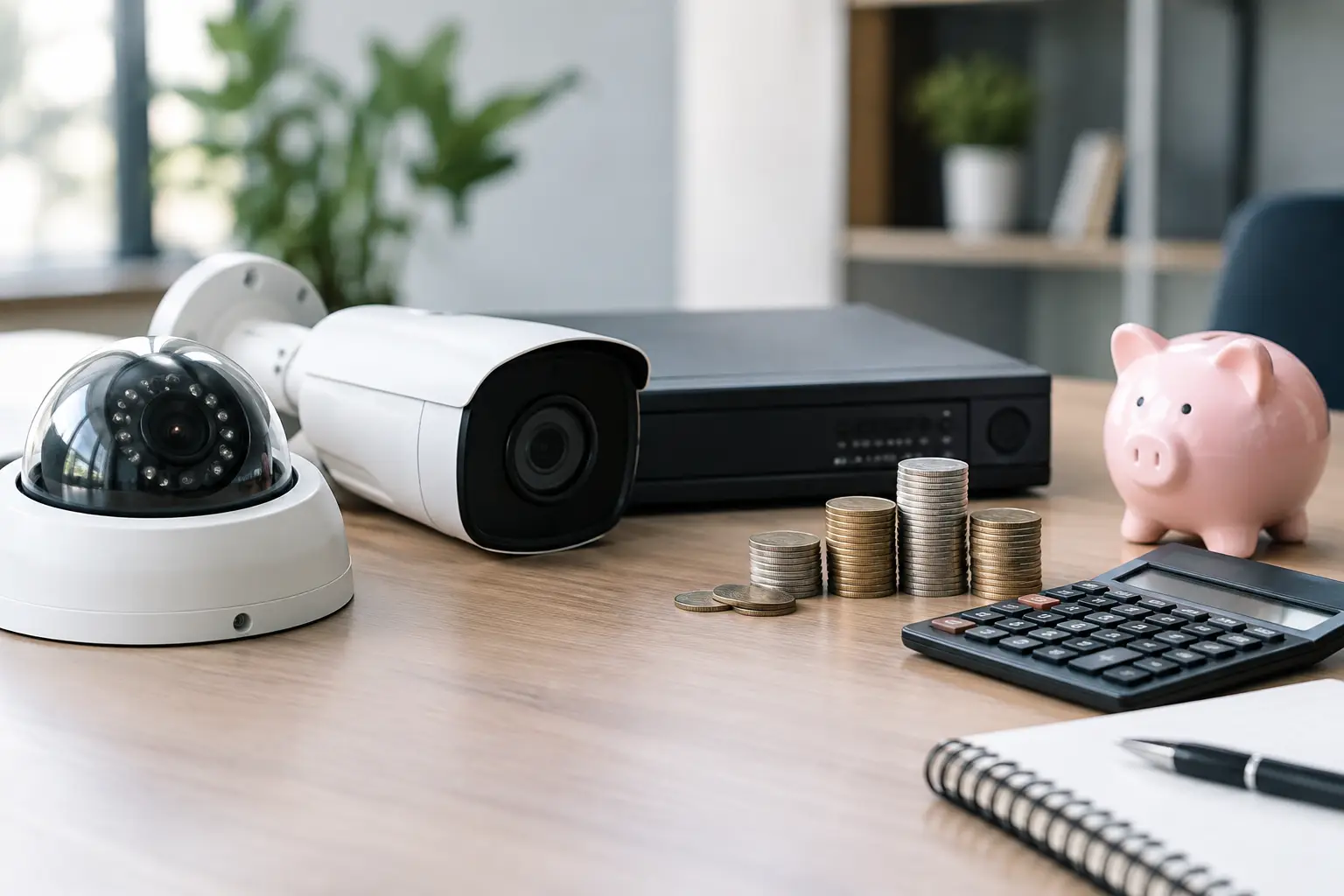
A low camera price can look attractive on a quote, then become expensive when it delivers weak night footage, lacks the right recorder capacity, or requires a return visit to correct installation issues. Security equipment pricing is not just the cost of a camera, lock, NVR, or switch. It is the cost of getting a reliable system installed, managed, and supported for the life of the property.
For dealers, installers, property managers, and business owners, the right budget starts with system requirements instead of a single product price. A small retail store may need four fixed IP cameras and a compact NVR. A warehouse or multi-site operation may need PTZ coverage, long-range networking, access control, cloud management, and storage designed for continuous recording. Those are different projects, and their pricing should reflect that.
What Security Equipment Pricing Should Include
A complete security quote should account for the equipment required to capture, transmit, record, power, and view video. For access control, it must also account for doors, credentials, locking hardware, egress requirements, and management software. Leaving out the supporting components is one of the fastest ways to create an inaccurate budget.
The core equipment cost typically includes cameras or access control devices, a recorder or controller, hard drives, PoE switches, power supplies, cabling, connectors, junction boxes, and mounting hardware. A system may also require a firewall, cloud router, wireless access point, monitor, decoder, or IP speakers for paging and alerts.
Installation labor is a separate and meaningful part of the total. Cable pathways, ceiling height, exterior wall penetrations, lift requirements, existing network conditions, and after-hours work can change labor pricing substantially. A camera installed on an accessible interior ceiling is not priced like one installed on a pole, above a loading dock, or across a large industrial yard.
Finally, include commissioning and long-term support. Recording schedules, mobile access, remote viewing permissions, alert rules, firmware updates, user training, and post-install troubleshooting all affect the value of the finished system. Equipment that is inexpensive but difficult to configure or support can cost more over time than a better-matched solution.
The Main Factors That Change Equipment Cost
Camera performance and coverage
Resolution is only one part of camera pricing. Higher resolution can provide more detail for identification, but it also increases bandwidth and storage requirements. A 4K camera may be the right choice at an entrance, cash wrap, vehicle gate, or large open area where digital zoom matters. It may be unnecessary for a narrow hallway where a properly positioned 4MP camera provides clear, usable footage.
Low-light performance also changes price and results. Full-color cameras, dual-light models, infrared cameras, and cameras with WDR solve different problems. WDR helps preserve detail when a doorway or storefront has bright backlighting. Dual lighting can provide color images when needed while using infrared in lower-impact conditions. The right feature depends on the scene, available lighting, and the evidence the customer needs to capture.
PTZ cameras cost more than fixed cameras because they add motorized pan, tilt, zoom, presets, and often longer-range optical zoom. They are valuable for active monitoring, parking lots, campuses, and large facilities. They should not replace fixed cameras at key identification points, because a PTZ can only look in one direction at a time.
Recording, storage, and retention
The recorder is the operational center of a video system. Pricing changes based on channel count, camera compatibility, decoding capacity, remote management features, and available drive bays. An NVR sized for eight cameras may be economical for a small location, while a larger NVR provides room for future expansion without replacing the entire recording platform.
Hard drive capacity is often underestimated. Storage needs depend on camera count, resolution, frame rate, compression, recording schedule, scene activity, and retention goals. Motion-based recording can reduce storage in low-activity areas, but busy entrances and loading zones may generate nearly continuous recording. If a customer needs 30, 60, or 90 days of footage, calculate storage before choosing the recorder and drives.
Do not treat surveillance drives as an afterthought. Video recording is a continuous workload. Drives selected for surveillance use are designed for the demands of multi-camera recording and playback, making them a better fit than a basic desktop drive in many deployments.
Network infrastructure and power
A reliable IP system depends on the network behind it. PoE switches simplify installation by carrying power and data over a single Ethernet cable, but switch selection must account for total PoE budget, port count, uplink capacity, and distance. A low-cost switch that cannot supply enough power to cameras, access points, or PTZ units creates problems that are avoidable at the design stage.
Network upgrades may be necessary when existing equipment is outdated, unmanaged, or shared with business-critical traffic. Managed switches, firewalls, cloud routers, and wireless access points can add to the initial quote, but they can also improve remote management, traffic control, cybersecurity, and troubleshooting. For multi-site customers, centralized cloud management can reduce the time required to maintain each location.
Access control requirements
Access control pricing varies based on the number of doors, credential types, lock hardware, and integration requirements. A single-door system with a keypad and electric strike is very different from a multi-door deployment with mobile credentials, card readers, schedules, audit trails, elevator control, and remote management.
Every door needs to be evaluated individually. The door material, frame condition, fire rating, lock type, request-to-exit device, emergency release, and code requirements all influence the installation. The controller may be the visible line item, but the opening hardware often determines the actual project complexity.
How to Compare Security Equipment Pricing Correctly
Comparing quotes only by the final number can lead to a poor purchasing decision. Compare the scope. Confirm the camera models, resolution, night performance, lens type, recorder channels, drive capacity, estimated retention, network hardware, accessories, and labor assumptions. If one quote includes junction boxes, surge protection, cable, configuration, and training while another does not, they are not equivalent offers.
Ask how the system handles future growth. A business adding cameras next year may save money by choosing an NVR with open channels and a switch with available PoE capacity now. On the other hand, overbuilding a small, stable site can tie up budget in capacity that will never be used. Good system design balances expansion room with the actual operating plan.
Support should be part of the comparison as well. When an installer needs help with NVR setup, third-party integration, firmware, or a replacement decision, responsive technical support has real value. Lifetime software upgrades and ongoing product support can reduce downtime and protect the original investment.
Budget by Risk, Not by Room Count
A better approach to budgeting is to rank areas by operational risk. Entrances, cash handling points, inventory rooms, loading docks, server rooms, employee-only doors, and parking areas often need different levels of coverage. Put the strongest cameras, retention, and access controls where an incident would create the greatest loss or liability.
This prevents two common mistakes: placing identical cameras everywhere regardless of the scene, or spending heavily on a wide overview image while missing the face, license plate, or door event that matters. A coverage plan should define what each camera needs to prove, not simply where it needs to be mounted.
For a complete deployment, Worldstar can help match cameras, recording, PoE, networking, access control, and installation support to the conditions at the site. The goal is not to buy the most equipment. It is to install the right equipment once, with clear footage, dependable operation, and a practical path for future expansion.
The best next step is a site-specific equipment list that identifies coverage goals, retention needs, network conditions, and installation constraints before the purchase order is written. That is where a security budget becomes a system that can perform when it is needed.