A camera that records an incident is useful. A camera that tells a property manager a person entered a restricted loading area after hours, follows the event across multiple views, and delivers the relevant clip in seconds is far more valuable. That is the practical promise behind the future of AI video analytics.
For security dealers, installers, integrators, and facility teams, AI is changing video surveillance from a passive archive into an operational tool. The goal is not to replace trained security personnel or turn every camera into a complicated software project. The goal is to reduce noise, prioritize real activity, and make video evidence easier to use when time matters.
The Future of AI Video Analytics Starts With Better Alerts
Traditional motion detection treats every change in pixels as potential activity. Rain, tree branches, headlights, shadows, insects, and moving signage can all trigger recordings and notifications. On a busy site, that creates a flood of alerts that staff eventually learn to ignore.
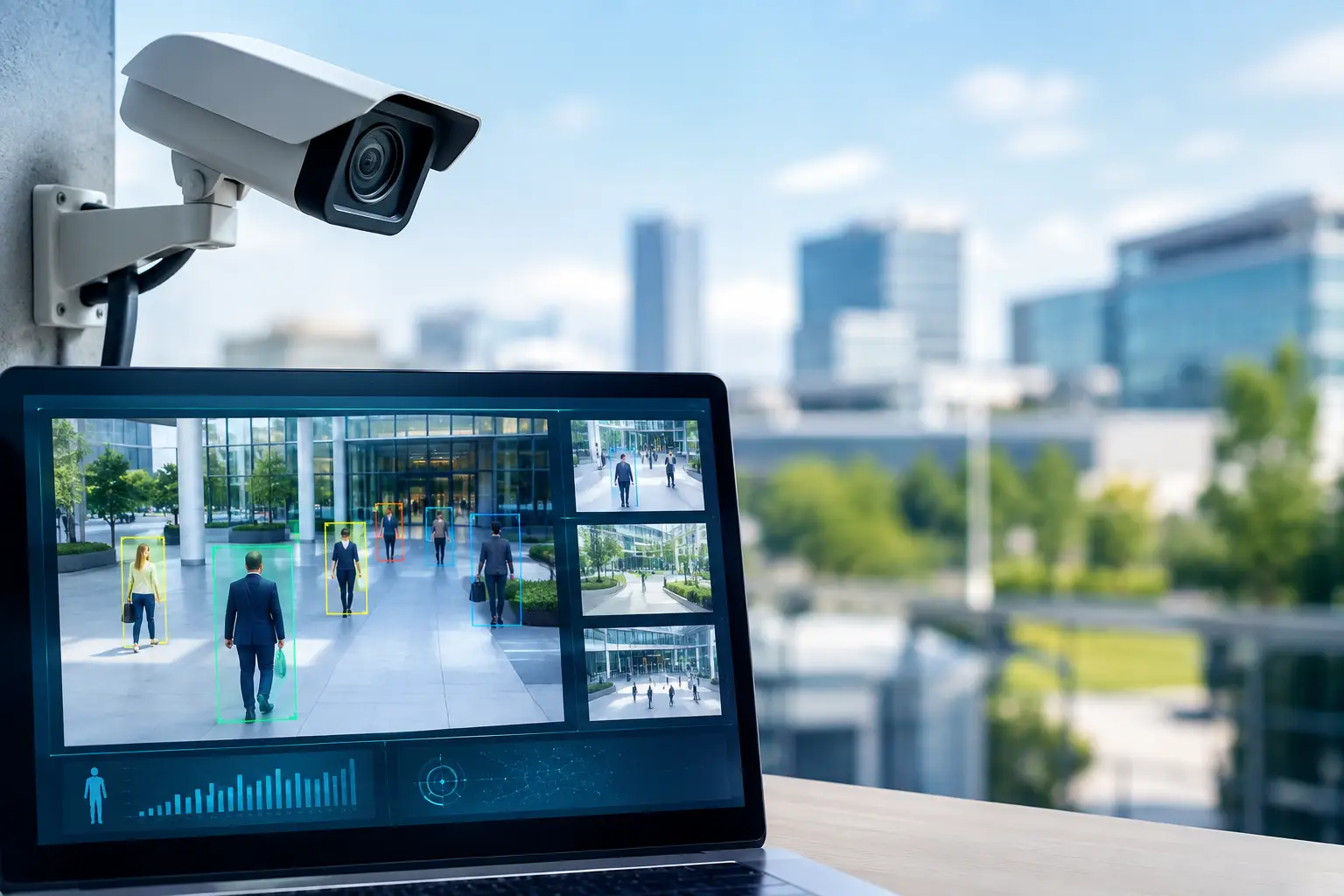
AI video analytics separates meaningful objects and behaviors from ordinary scene movement. Instead of receiving an alert for motion near a perimeter fence, an operator can receive an alert for a person crossing a virtual line, a vehicle entering through an exit lane, or a vehicle stopped in a fire lane for longer than a defined period.
This is where the technology earns its place in a security deployment. Fewer nuisance alerts mean less time spent reviewing empty clips and a better chance that a real event receives immediate attention. It also helps installers demonstrate measurable value beyond camera resolution and storage capacity.
Accuracy still depends on the camera view, lighting, mounting height, scene complexity, and configuration. AI cannot correct a poorly positioned camera pointed directly into glare, nor can it identify useful details from footage that is too dark or too wide. Strong analytics begin with proper site design, crystal-clear image capture, and careful rule setup.
From Object Detection to Event Intelligence
The first phase of AI surveillance focused heavily on classifying people and vehicles. That remains one of the most useful functions in the field. A retail manager may want alerts only when a person approaches a rear door after closing. A warehouse may need vehicle events at a gate while ignoring employee foot traffic on a nearby sidewalk.
The next phase is event intelligence. Rather than simply identifying what appears in the frame, systems will evaluate how objects move and interact with defined areas. This includes line crossing, intrusion zones, loitering, crowd density, abandoned objects, queue length, and directional travel.
For example, a camera covering a school entrance can distinguish normal arrival traffic from someone moving against the expected direction through a controlled access point. At a multifamily property, analytics can identify repeated activity near package rooms or restricted maintenance areas. At an industrial facility, the same system can help verify whether vehicles are using approved routes.
These functions should be selected based on a real security objective. Enabling every available analytic on every channel is rarely the right approach. It can increase alerts, consume processing resources, and create an interface that operators do not use. A better approach is to define the risk, choose the event that represents that risk, and test the rule during normal and after-hours conditions.
Search Will Become as Important as Live Monitoring
Many incidents are discovered long after they happen. A shipment goes missing. A vehicle is damaged overnight. A property manager receives a complaint two days later. In these cases, the value of AI is often less about real-time alerts and more about finding the relevant footage quickly.
Smart search tools can filter recorded video by person, vehicle, color, direction, time, or activity within a selected area. Instead of reviewing eight hours of video from several cameras, an operator can search for a white pickup truck entering a delivery zone between 6:00 p.m. and midnight. The result is a shorter path from question to evidence.
As systems improve, search will become more conversational and contextual. Operators may be able to ask for events such as vehicles stopped near a gate, people entering a side entrance after business hours, or deliveries made to a specific zone. The practical benefit is not novelty. It is reducing investigation time for staff who already have too many responsibilities.
That said, search results must be verified against the actual footage. AI classifications can be affected by weather, camera angle, occlusion, low light, and unusual object shapes. Video analytics should narrow the review process, not replace professional judgment.
Edge AI Will Make Deployment More Scalable
The future of AI video analytics will not rely entirely on sending every video stream to the cloud. More cameras now include onboard processing that performs object classification and event detection at the edge. This reduces unnecessary bandwidth use and allows faster event decisions at the camera or recorder level.
For a small business with a local NVR, edge analytics can deliver person and vehicle filtering without requiring a large server installation. For a multi-site operation, centralized cloud management can provide standardized alert rules, health monitoring, remote user access, and consolidated video search across locations.
The right architecture depends on the site. Local recording may be the best fit where internet service is limited, retention requirements are high, or a business wants direct control over recorded data. Cloud-managed systems can simplify expansion for customers with multiple properties and limited on-site IT resources. Hybrid designs often provide the most practical balance by retaining critical footage locally while using cloud tools for management and notifications.
Network planning remains essential. High-resolution IP cameras, AI processing, remote viewing, and longer retention periods all create demands on switches, PoE budgets, uplinks, storage, and firewall configuration. A security system performs only as well as the infrastructure supporting it.
Better Video Depends on Better Camera Placement
AI does not make every camera suitable for every analytic. Installers should match the camera type and feature set to the scene before discussing software rules.
A fixed turret or bullet camera may be ideal for a doorway, cash-wrap area, corridor, or narrow vehicle entrance. A PTZ camera can provide active coverage across a large parking area, but it cannot analyze every direction at once while moving. Full-color cameras and dual-light models can improve nighttime identification, while WDR helps maintain usable images where bright exterior light and darker interior areas appear in the same view.
For perimeter protection, a camera should be positioned to capture people or vehicles at an angle and size that supports dependable detection. Avoid placing detection zones over public roads, moving trees, reflective surfaces, or areas with constant foot traffic unless those events are genuinely relevant. A simple installation that is correctly aimed and tested will outperform an overconfigured system with poor field of view.
Privacy, Policy, and Cybersecurity Will Shape Adoption
More intelligent surveillance also requires better operating discipline. Property owners need clear policies for who can access video, how long footage is retained, and how alert data is handled. This is particularly important in healthcare, education, residential communities, and workplaces where cameras may capture sensitive activity.
Features such as privacy masking, role-based user permissions, audit logs, encrypted remote access, and regular firmware updates should be part of the deployment conversation. Default passwords, exposed recorders, and unsupported devices create risks that no analytic feature can solve.
Facial recognition deserves special caution. Its legal, privacy, and accuracy considerations vary by location and use case. Many customers can achieve strong security outcomes with person, vehicle, intrusion, and behavior analytics without using identity-based tools. The best recommendation is the one that meets the customer’s actual need while fitting their policy and compliance requirements.
What Security Professionals Should Plan for Now
The most effective AI deployments start with a site assessment, not a feature checklist. Identify the entrances, assets, operational bottlenecks, and recurring incidents that matter most. Then build camera coverage and analytic rules around those priorities.
For dealers and integrators, this creates an opportunity to deliver more than hardware. A complete solution may include IP cameras, NVR storage, PoE switching, reliable network configuration, access control integration, remote management, and post-installation tuning. After deployment, analytics should be reviewed periodically because a new parked vehicle, seasonal foliage, changed traffic pattern, or remodeled entrance can affect performance.
Worldstar supports this practical approach with security equipment and technical services designed for complete surveillance deployments, from cameras and recorders to network infrastructure and ongoing system support.
The next generation of surveillance will reward systems that are simple to manage, correctly installed, and built around real operational questions. Start with the event that matters most at the property, then design the video system to recognize it reliably.